Disclaimer: This post contains affiliate links. As an Amazon Associate and member of other affiliate programs (including Temu), I earn from qualifying purchases. If you click a link and make a purchase, I may receive a small commission at no extra cost to you. I only recommend gear I genuinely trust.
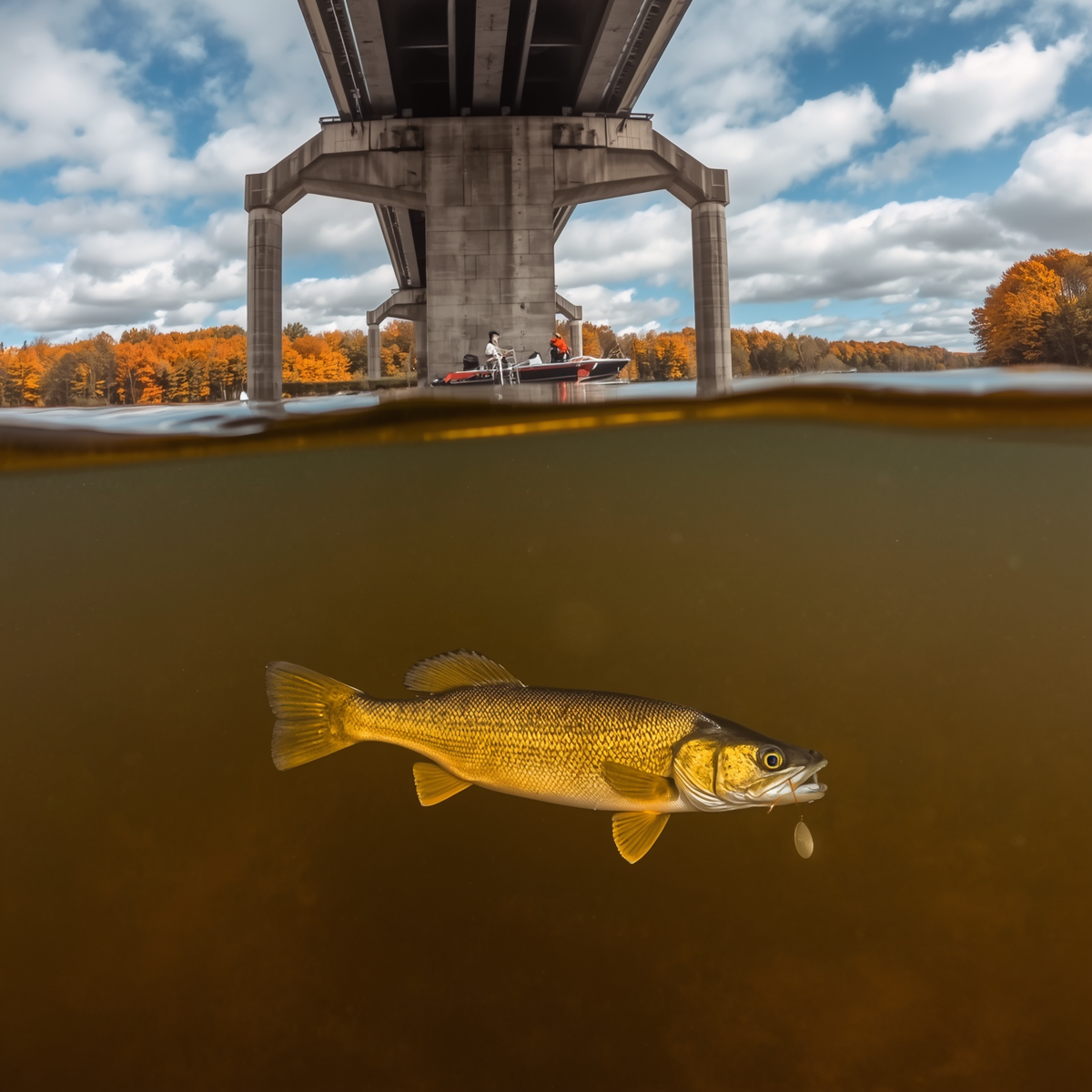
Increased rain and cooler weather in autumn boost current flow throughout the Scugog River system. Walleyes capitalize on this flow, using structural breaks to ambush drifting baitfish.
Mapping River Current Breaks
Current breaks allow walleyes to rest out of the main flow while watching for prey:
- Bridge Abutments: Heavy concrete pillars that split main river currents.
- Outside Channel Bends: Deep cuts carved out by river bends.
- Mouth of Backwater Bays: Transition points where calm bay water meets river flow.
[Main River Current (Fast)] ===>
                            | [Bridge Abutment / Concrete Wall]
                            \---> [Slack Water Eddy - Walleye Holding Zone]
Pitching Blade Baits & Bucktail Jigs
Vibration and precise depth control are critical in moving river water.
The Setup
- Rod/Reel: 6’8″ Medium power, fast-action spinning rod.
- Line: 10 lb braid attached to an 8 lb fluorocarbon leader.
- Lure: 1/4-oz to 3/8-oz metal blade baits (e.g., Cicada, Heddon Sonar) or compact 1/4-oz hair jigs.
The Technique
- Pitching: Pitch your lure upstream into the current break. Let it sink to the bottom.
- Action: Lift the rod tip sharply 12 inches to make the blade bait vibrate, then let it fall back to the bottom on a semi-tight line. Walleyes almost always strike on the drop.
Scugog River Target Zones to Map Out
Focus on river stretches near Lindsay, targeting bridge crossings, lock approach walls, and sharp channel bends.