Disclaimer: This post contains affiliate links. As an Amazon Associate and member of other affiliate programs (including Temu), I earn from qualifying purchases. If you click a link and make a purchase, I may receive a small commission at no extra cost to you. I only recommend gear I genuinely trust.
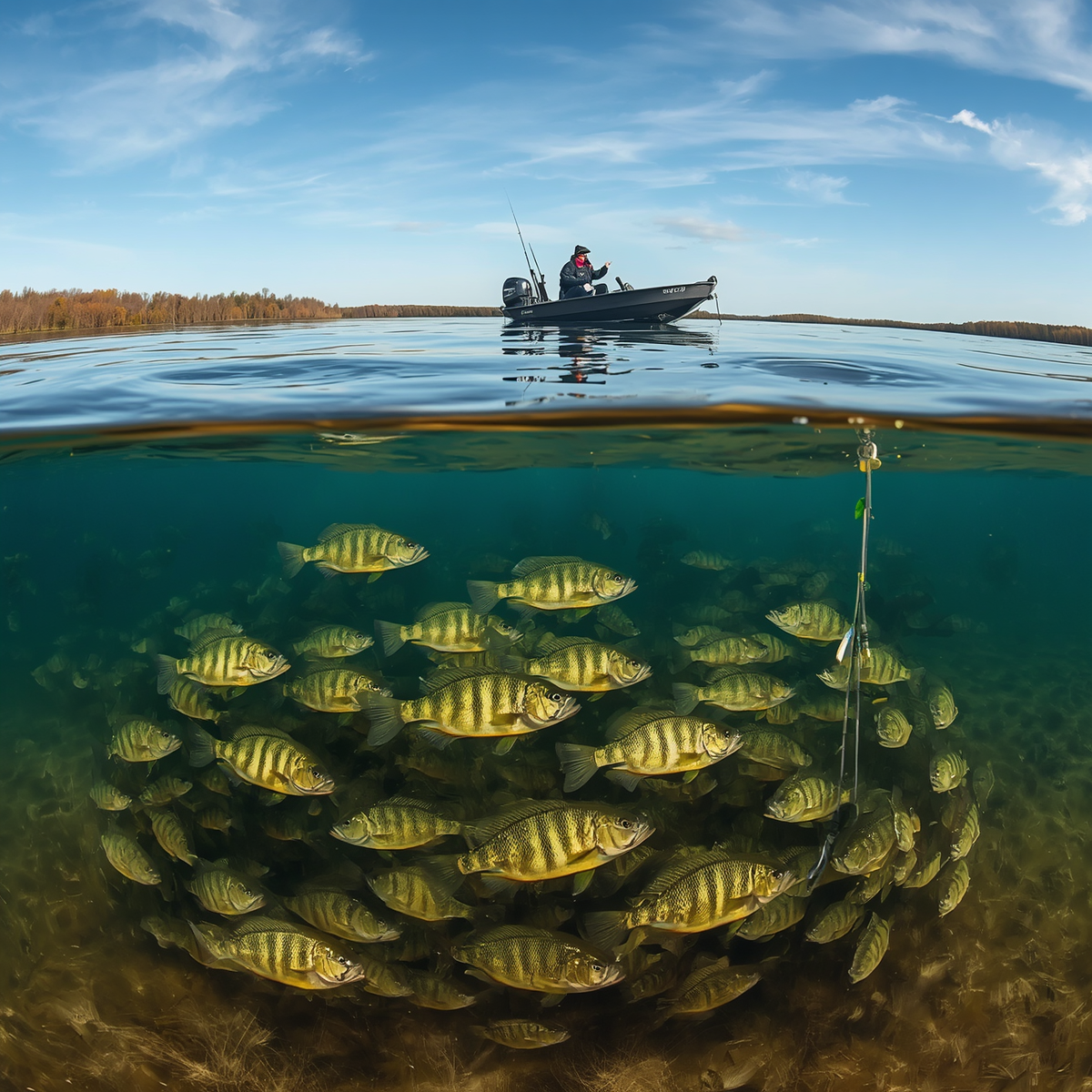
Rice Lake is renowned for panfish, but late fall alters their locations. As shallow weeds die, jumbo yellow perch migrate out to open-water mud flats to feed on burrowing midge larvae and small baitfish.
Locating Basin Perch Schools
Look for wide, featureless basin areas adjacent to summer weed lines:
- Main Lake Mud Basins (14–18 ft): Soft bottom areas holding aquatic worms and larvae.
- Deep Hard-to-Soft Transitions: Boundaries where hard gravel turns into soft mud.
- Deep Drop-Off Edges: Slopes extending from islands down into the main lake floor.
[Shallow Summer Flat (6ft)]
         \
          \___ [Deep Transition Drop-Off]
                   \ ---> [Jumbo Perch Pods on Mud Floor (15-18ft)]
The Double-Hook Spreader Rig
When perch spread out across mud flats, a two-hook bottom rig allows you to test different depths and baits simultaneously.
The Setup
- Rod/Reel: 6’0″ or 6’6″ Light action spinning rod.
- Line: 6 lb fluorocarbon main line.
- Rig: Commercial wire spreader rig or custom 2-hook dropper rig with a 1/4-oz bottom weight.
- Bait: Small live emerald shiners or pieces of nightcrawler.
The Technique
- Presentation: Lower the rig to the bottom and lift it 2 to 3 inches so the weight ticks the mud.
- Detection: Keep a tight line. Perch bites appear as quick, successive taps. Wait for a steady pull before lifting the rod tip.
Rice Lake Target Zones to Map Out
Target the deep basin mud flats off Bewdley and the open water stretches south of Sugar Island.