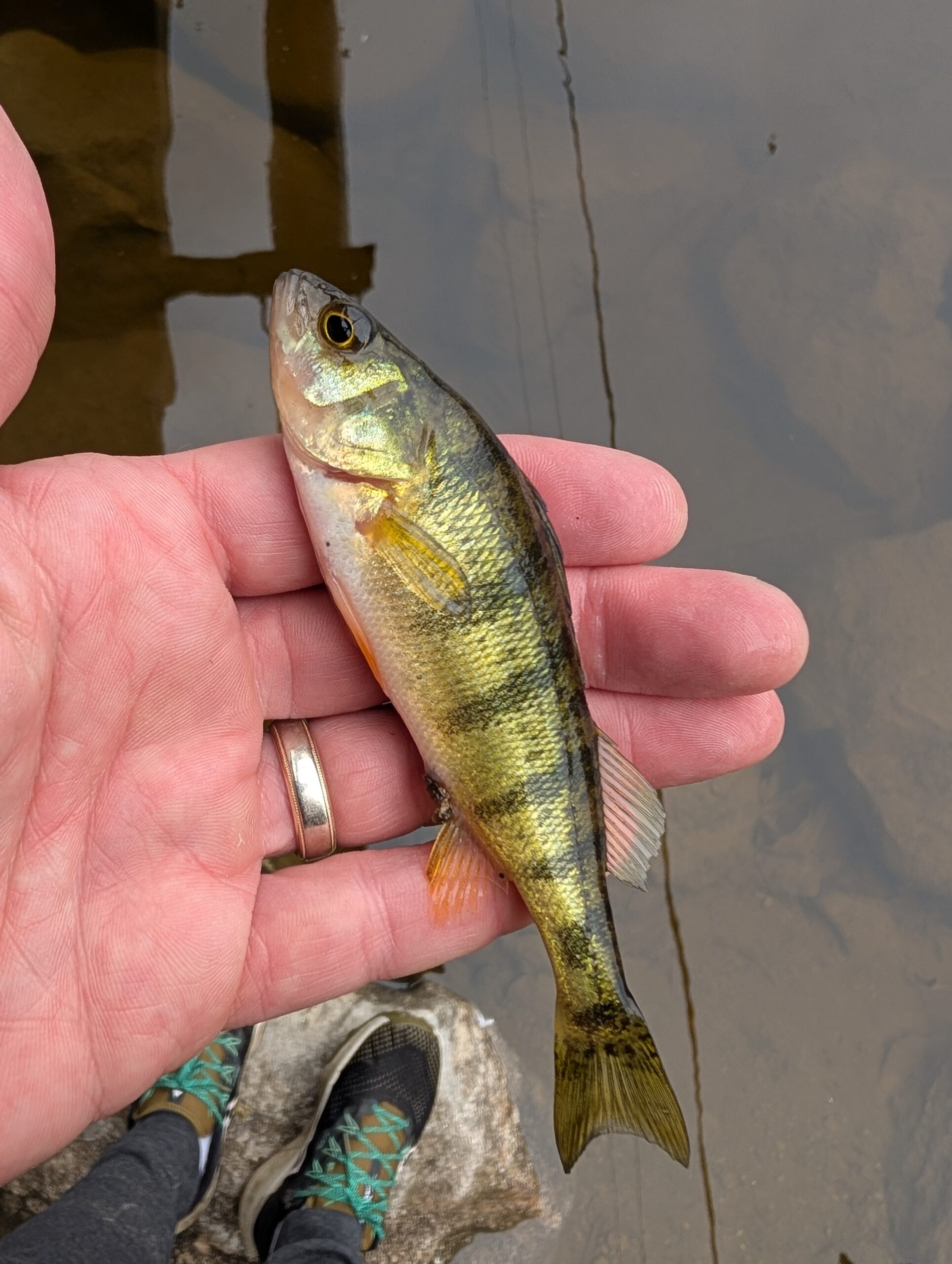
The “shoulder season” between spring melt and the opening of bass season is one of the most productive times of the year to target Yellow Perch, hopefully bigger than the ones in this articles image. However, because large perch frequently cohabitate with both Largemouth and Smallmouth Bass, fishing for panfish in May and early June requires specific tactical adjustments to ensure you stay on the right side of conservation regulations.
Below is a complete guide to maximizing your springtime perch harvest while operating under strict ethical and regional guidelines.
1. Locating Late-Spring Perch (Without the Bass)
Post-spawn Yellow Perch school aggressively in late spring to feed on emerging macroinvertebrates, minnows, and young-of-the-year forage. To find heavy concentrations of perch while minimizing your interactions with nesting or staging bass, seek out specific environmental transitions.
- Mud Flats and Soft Bottoms: Perch love to roam expansive mud flats in 8 to 15 feet of water where bloodworms and insect larvae emerge. Bass, conversely, prefer harder transitions, rock piles, or heavy shoreline wood during this period.
- Deep Weed Edges: Look for new, green vegetation (like early-season milfoil or pondweed) growing along drop-offs. Perch will cruise the deeper, lakeward edge of these flats, whereas male bass are typically locked onto shallow, saucer-shaped nests closer to the shoreline.
- The 3-Foot Rule: Avoid fishing shallow, protected bays with gravel or sand bottoms in less than 4 feet of water. These are prime bass spawning sanctuaries. Stick to deeper water columns where schools of perch stack vertically.
2. Downsizing Your Presentation
The absolute easiest way to prove you are legally targeting panfish is your choice of tackle. If you are throwing a 5-inch Senko or a massive chatterbait in May, no officer will believe you are looking for perch. Downsizing is essential for both legal compliance and matching the true spring forage size.
The Downsized Tackle Matrix
| Presentation Style | Specific Rigging | Target Perch Forage | Why It Prevents Bass Strikes |
| Micro-Drop Shot | 1.5″ to 2″ soft plastic minnow or paddle tail on a #4 or #6 hook. | Shiners, young perch, zooplankton | Small profile typically ignored by large, aggressive spawning female bass. |
| The Panfish Jig | 1/16 oz to 1/32 oz marabou or curly-tail jig tipped with a live maggot or waxworm. | Mayfly nymphs, midges, larvae | Lacks the water displacement or noise required to trigger a predatory bass reaction. |
| The Slip Float Rig | A small pencil float suspending a single lively stream shiner or piece of nightcrawler. | Opportunistic baitfish/worms | Highly stationary presentation that stays localized in deeper perch schools. |
3. Tactical Adjustments: If Bass Move In, You Move Out
Even with tiny presentations, hungry or defensive bass will occasionally strike your perch rigs. Managing your location dynamically is the hallmark of an ethical angler.
1.Evaluate the Catch Frequency:Immediate Observation.
If you catch a single, accidental bass, release it immediately. If you hook a second bass within a few casts, it is no longer an accident—you are sitting on active nesting or staging grounds.
2.Pull Your Line and Move Deeper:Tactical Relocation.
Pack up your lines immediately. Move your vessel or shift your casts further away from the shoreline structure. Push out past the primary drop-off into deeper water columns (12 to 18 feet) where bass density drops significantly.
3.Switch Away from Flash and Vibration:Lure Modification.
If you were using micro-swimbaits or tiny inline spinners, switch entirely to a static live-bait presentation like a slip bobber or a bottom-bound drop shot. Eliminating high-vibration movement reduces the protective, aggressive striking instinct of nesting male bass.
4. Processing and Conservation Ethics
Yellow Perch make phenomenal table fare, but they are slow-growing fish compared to other panfish species.
💡 The “Jumbo” Conservation Rule
A 12-to-14-inch “Jumbo” perch is often 6 to 8 years old and is almost always a highly productive female carrying critical genetics. For the best quality meat and long-term fishery health, harvest the abundant 8-to-10-inch males and release the true giants to spawn another day. Always check your local zone regulations for daily catch and possession limits before heading out.