Disclaimer: This post contains affiliate links. As an Amazon Associate and member of other affiliate programs (including Temu), I earn from qualifying purchases. If you click a link and make a purchase, I may receive a small commission at no extra cost to you. I only recommend gear I genuinely trust.
Ask any casual weekend angler where to find summer walleyes, and they’ll point you out toward the deepest basins of the lake, talking about lead-core trolling lines and complex mid-lake humps. And while those deep-water fish certainly exist, there is a whole separate class of resident “pickerel” that completely ignore the rulebook.
They don’t want the deep mud flats; they want moving water, oxygen, and structure. And there is no better place to find that than the historic lock walls of the Trent-Severn Waterway.
From the rushing waters below Lock 19 in Peterborough to the concrete channels of Bobcaygeon, Fenelon Falls, and Buckhorn, these lock systems act as massive environmental funnels. All day long, water surges through the sluice gates, creating highly oxygenated, fast-moving current. This moving water tumbles disoriented minnows, crayfish, and perch straight into the path of waiting predators.
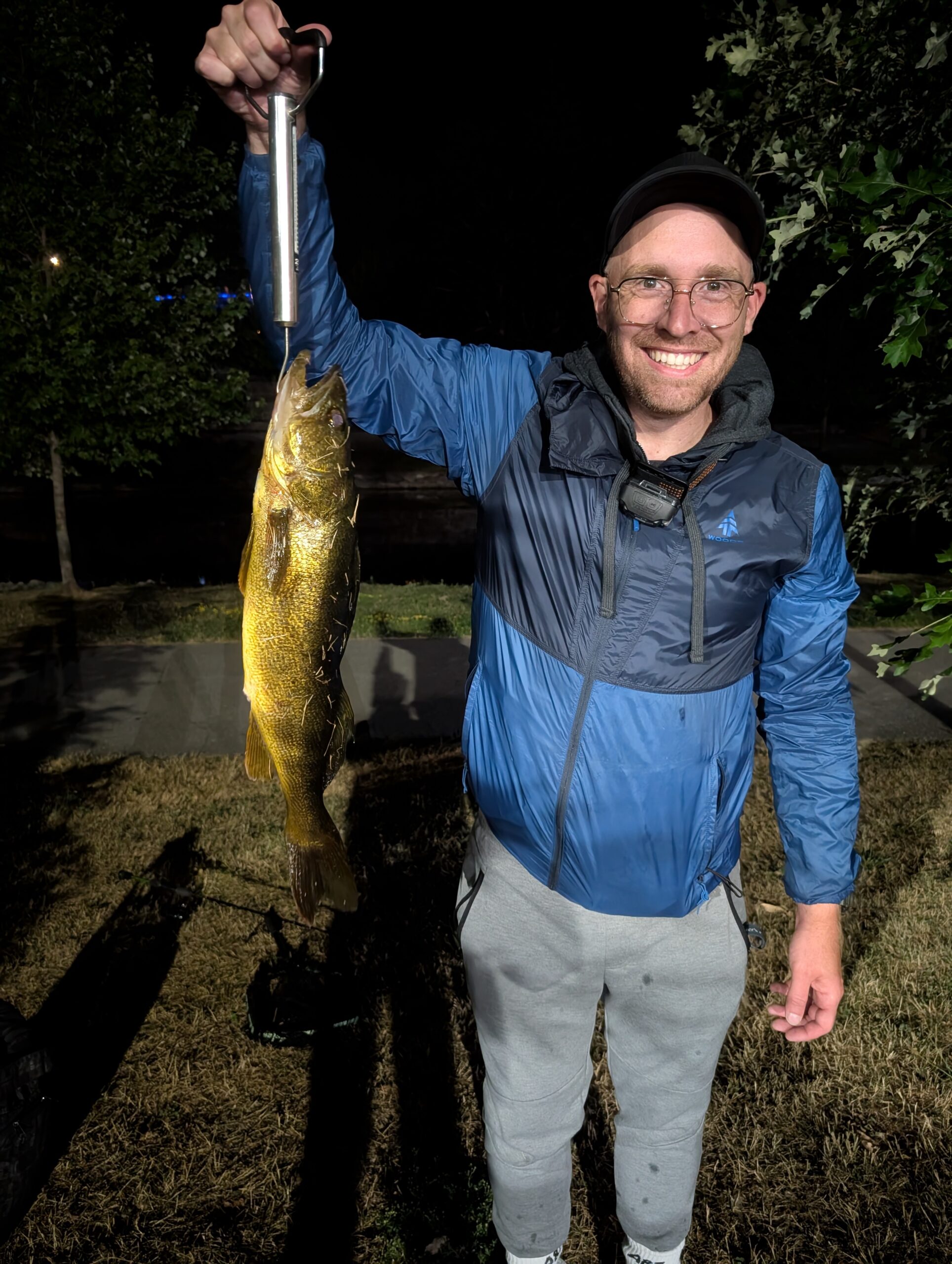
When the sun drops below the tree line and the heavy boat traffic shuts down for the evening, the local walleyes slide right up against the concrete walls and current breaks to execute their night raids. The best part? It’s completely accessible from dry land.
The Concrete Current Matrix
To successfully fish the lock walls, you have to understand how a walleye uses current. They are not swimming out in the middle of the roaring main flow—that burns too much energy. Instead, they sit in the eddy breaks—the quiet pockets of slack water created right behind concrete pilings, bridge abutments, or where the lock wall juts out into the stream.
🌊 Lock Wall Presentation Guide
| Lure Setup | Weight & Rigging | Targeted Water Column | The Presentation Method |
| Paddle Tail Swimbait (e.g., 3.5″ Keitech Swing Impact) | 1/4 oz unpainted round jig head. | Mid-water column along the concrete face. | The Wall Scrape: Cast upstream into the current, parallel to the wall. Let the bait sink halfway, then retrieve it just fast enough to keep the tail thumping as it sweeps along the concrete. |
| Hair Jig & Minnow (e.g., Black or Bucktail Jig) | 1/8oz or 1/4oz tipped with a salted minnow. | Cracks and seams along the rocky bottom. | The Current Drift: Cast directly across the flow. Keep a semi-taut line and let the current naturally bounce the jig along the bottom through the slack-water eddies. |
Tactical Execution: The Stealth Element
Lock wall walleyes are highly sensitive to vibration and artificial light. Because you are standing directly above the fish on concrete, every time you slam a tackle box lid, stomp your boots, or shine your high-lumen headlamp directly into the water, you are actively clearing the pool of fish.
Walk quietly, keep your light pointed back toward the grass when rigging hooks, and wear dark clothing that blends into the night sky.
Position yourself just upstream of a visible current seam. Cast your paddle tail out and let the moving water sweep it down along the dark shadow-line created by the wall. Walleyes will sit with their noses pointing directly into the flow, perfectly camouflaged in the dark water.
When your lure ticks past that concrete corner into the slack pocket, the strike won’t be subtle—it will be a sharp, distinct thud as the fish inhales the bait and uses the power of the current to bolt. Keep your rod tip up, steer them away from the jagged concrete rebar, and enjoy some of the most consistent, exciting shore-fishing action Ontario has to offer.