Disclaimer: This post contains affiliate links. As an Amazon Associate and member of other affiliate programs (including Temu), I earn from qualifying purchases. If you click a link and make a purchase, I may receive a small commission at no extra cost to you. I only recommend gear I genuinely trust.
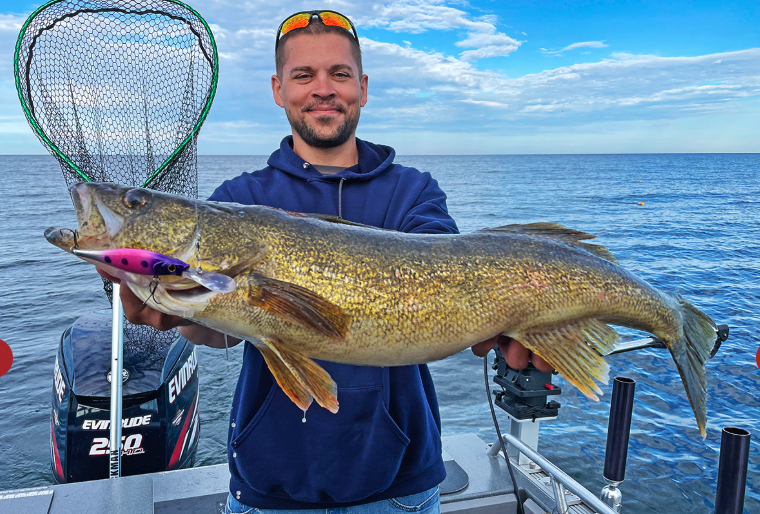
Image of potential record fish from In-Fisherman (https://www.in-fisherman.com/editorial/new-york-next-world-record-walleye/477996)
There is a profound, beautiful stillness that settles over a lake like Stony or Balsam at 11:30 PM in July. The cottagers have put their boats away, the lake surface turns into an absolute mirror reflecting the stars, and the suffocating daytime heat breaks into a cool, crisp breeze. For most people, the day is done. But for a hardcore walleye angler, this is when prime time officially begins.
During the day, a walleye is a cautious, deep-dwelling creature. Their highly specialized, metallic-looking eyes (called the tapetum lucidum) are designed to amplify light, making bright July afternoons incredibly painful for them. They bury themselves deep in the weeds or hold tight to dark mud bottom transitions in 18 feet of water, feeding only when a heavy chop breaks up the surface light.
But when darkness falls completely, those sensitive eyes turn them into the ultimate apex predators of the shallows.
Once the sun disappears, massive schools of hungry walleyes leave their deep daylight sanctuaries and make a coordinated run right up into the shallows. They will prowl gravel flats, sand bars, and rocky shoals in as little as 3 to 6 feet of water—places you wouldn’t even dream of looking for a walleye during the day. They are there for one reason: to slaughter schools of roosting baitfish that can’t see in the dark.
Here is that exact day-to-night movement pattern organized into a clean, easy-to-read chart that your readers can screenshot and save on their phones before hitting the water:
🌗 The Summer Walleye Diurnal Shift
| Time of Day | Target Depth | Primary Cover & Structure | Angler Presentation & Strategy |
| ☀️ DAYTIME (Intense Sun / Boat Traffic) | 15 to 20 Feet (The Basement) | Deep green cabbage edges, mid-lake rock piles, and soft mud humps. | Lethargic Fish: Requires heavy reaction jigs or slow-trolling deep worm harnesses to trigger an instinct bite. |
| 🌙 NIGHTTIME (Pitch Black / Glass-Calm) | 3 to 6 Feet (The Shallows) | Shallow gravel flats, shoreline sand points, and island shoals. | Aggressive Hunters: Fish are actively prowling for baitfish. Target them by long-line trolling shallow minnow plugs. |
The Stealth Trolling System
To catch these midnight marauders, you need to ditch the vertical jigs and pick up a trolling rod. The best technique is long-line trolling shallow-running minnow plugs over rocky structures.
1.Chart Your Shoals Before Dark:Electronics Prep.
Do not try to navigate unfamiliar rock bars in pitch black water. Use your GPS electronics during the afternoon to map out a safe, clear path along a shallow rocky point or island shoal that drops off quickly into deep water.
2.Tie on Shallow Slender Minnow Plugs:Rig Selection.
Select a 4-to-5-inch slender floating minnow bait (like a Rapala Original Floater or a shallow Smithwick Rogue) in silver/black, gold, or purple finishes. Tie it directly to a 12-lb fluorocarbon leader with no added weights.
3.Deploy the Long-Line Stealth Troll:Boat Operation.
Let out at least 100 to 120 feet of line behind your boat. Because you are fishing shallow water, the sound of your outboard will temporarily split the fish. A long lead line ensures the walleyes settle back onto the shoal by the time your lure passes through. Move at a dead crawl—between 1.0 and 1.2 mph.
🌙 A Note on Midnight Boat Safety
Night fishing is incredibly addictive, but it demands absolute vigilance. Turn your dashboard electronics screen brightness all the way down to preserve your night vision. Keep your red/green bow lights and white stern light on at all times—it’s the law, and it prevents other night anglers from running into you.
Most importantly, keep a headlamp around your neck but never shine it directly onto the water you are fishing. A sudden beam of artificial light across a 4-foot-deep rock bar will instantly spook an entire school of cruising walleyes, ruining the hard work you put into finding them. Stay stealthy, listen for the sound of baitfish flipping on the surface, and hold onto your rod tight.