Disclaimer: This post contains affiliate links. As an Amazon Associate and member of other affiliate programs (including Temu), I earn from qualifying purchases. If you click a link and make a purchase, I may receive a small commission at no extra cost to you. I only recommend gear I genuinely trust.
If you’ve spent most of your time fishing the southern end of the Kawartha chain—places like Scugog or the muddy weed flats of Rice Lake—you probably think bass fishing is entirely about heavy rods, green water, and wrestling fish out of thick lily pads. But if you haul your boat just a bit further north, the landscape undergoes a dramatic shift. The soft mud disappears, replaced by the rugged, pine-lined granite shores of the Canadian Shield.
Welcome to the capital of Kawartha Smallmouth Bass: waters like Stony Lake, Katchewanooka, and the swirling pools around Burleigh Falls.
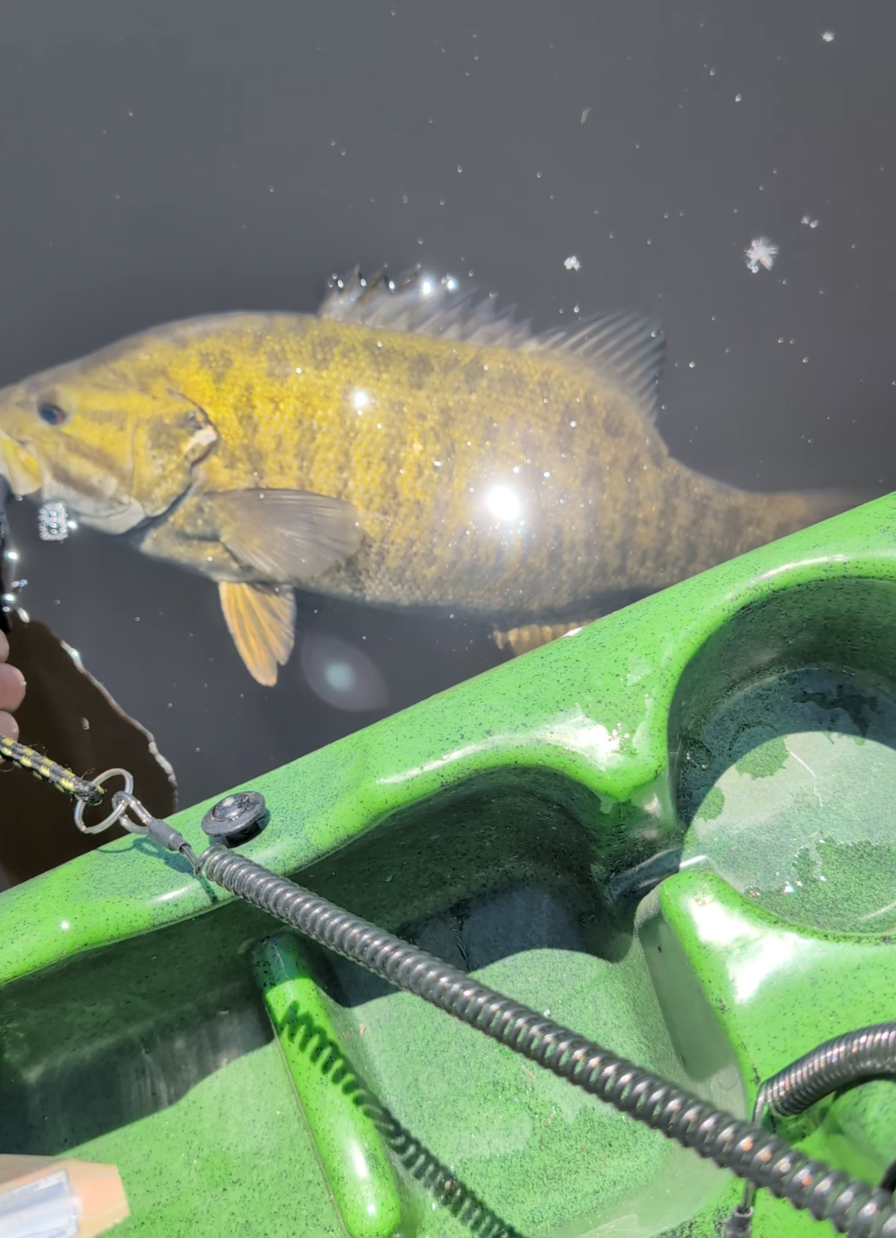
While a largemouth bass is content to sit under a warm weed mat in three feet of water all summer, a July smallmouth hates it. They are clean-water snobs. When the summer heat peaks, the big, copper-backed “bronzebacks” abandon the shorelines completely and head out to the structural highways of the main lake. We are talking about deep rocky points, sunken boulder islands, and underwater gravel reefs that top out in 12 feet of water but drop straight down into 25 or 30 feet of dark, cool water.
Finding them out there in the wide-open lake can feel like looking for a needle in a haystack. But once you find a school of deep summer smallmouths, it is non-stop, drag-screaming action with fish that know how to fly.
The Deepwater Finesse Strategy
To catch these deep, clear-water smallmouths, you need to leave your heavy flipping sticks in the locker. These fish have excellent vision, and they are feeding primarily on two things: crayfish crawling over the rocks and schools of roaming pelagic baitfish.
🪨 The Smallmouth Finesse Toolset
| Tactical Weapon | Exact Rigging | The Target Target Zone | The Retrieval Secret |
| The Ned Rig | 1/10 or 1/8 oz mushroom jig head with a 3″ buoyant stick bait (Green Pumpkin or Coppertreuse). | Bare rock points, gravel flats, and the base of sunken boulder piles. | Dead-sticking. Let it hit the bottom and do absolutely nothing for 5 seconds. The buoyant tail stands straight up like a defensive crayfish. |
| The Drop Shot | #2 split-shot/drop-shot hook tied 18 inches above a 3/8 oz pencil weight. 3″ goby or leech imitation. | Vertical structures, deep ledges, and fish marked directly on your electronics in 18–25 feet of water. | Subtle shaking. Drop it straight down under the boat. Keep the weight locked on the bottom and gently quiver your rod tip to make the plastic dance. |
Tactical Execution: Trusting the Graph
Summer smallmouth fishing is a game of electronics and patience. Cruise the mid-lake structures at 4 to 5 mph while watching your sonar. You are looking for distinct, hard-bottom returns (thick lines on your screen indicating rock rather than mud) and small “arches” holding just off the bottom or stacked tightly against underwater ledges.
When you mark a school, don’t just blindly cast. Position your boat upwind, drop your trolling motor, and use a Drop Shot to fish for them vertically. Drop the heavy tungsten weight straight down until it hits the granite. Keep your line taut but leave the weight resting on the bottom.
Instead of aggressively jigging, just gently shake your rod tip. You want that little plastic minnow or leech to hover and quiver right in their faces. When a deep smallmouth hits a drop shot, there’s no mistaking it—your rod tip will simply fold over as the fish grabs the bait and heads back down into the deep water. Get ready for an immediate, acrobatic leap the second they feel the steel!