Disclaimer: This post contains affiliate links. As an Amazon Associate and member of other affiliate programs (including Temu), I earn from qualifying purchases. If you click a link and make a purchase, I may receive a small commission at no extra cost to you. I only recommend gear I genuinely trust.
If you’ve spent any time fishing public waters in Ontario lately—whether you’re launching a kayak into the Kawartha Lakes, working the weed edges of Omemee, or casting around heavily targeted lock systems—you already know the frustration. By mid-summer, every bass, crappie, and perch in the lake has seen a thousand full-sized spinnerbaits, massive swimbaits, and standard 4-inch curly-tail grubs.
They don’t just get smart; they get lockjaw.
When the bite slows to a crawl under the blazing summer sun, or when the weekend boat traffic has the fish completely spooked, most anglers react by changing colors or casting harder. But the real secret to unlocking a stubborn bite isn’t changing color—it’s changing the profile. Welcome to the micro-lure revolution.
Breaking the Pressure Barrier
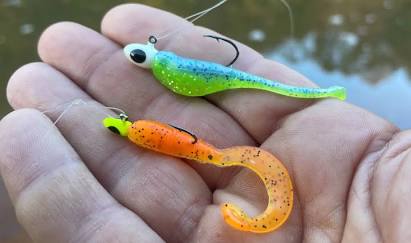
Downsizing your presentation to ultra-light finesse plastics and tiny micro-jigs (we are talking bait under 1.5 inches and jig heads scaling down to 1/16 oz or even 1/20 oz) completely changes the underwater game.
To a heavily pressured 4-pound largemouth or a stubborn smallmouth, a massive topwater prop-bait looks like a threat or a trick. But a tiny, 1.25-inch creature bait slowly dancing on the bottom? That looks like a non-threatening, effortless snack. It triggers an instinctual, reactionary feeding response that even the most educated fish can’t resist.
The Multi-Species Jackpot
The absolute best part of committing to the micro-lure strategy is the sheer action it generates. When you throw standard bass gear, you limit yourself to bass. When you scale down, the lake opens up.
On any given cast with a micro-setup, you are firmly in play for a true multi-species grand slam. You can systematically fill a livewell with slabs of dinner-plate Crappie and Jumbo Perch, while simultaneously hooking into aggressive, tournament-sized bass that are keyed in on tiny young-of-the-year baitfish. It is high-volume, high-adrenaline fishing where the rod is constantly bent.
The Core Micro-Rigs That Trigger the Bite
To successfully fish micro-lures, you can’t just tie a tiny plastic onto a heavy bass hook. You need specialized, downscaled rigging systems that allow these miniature baits to move naturally underwater. Here are the three lethal micro-presentations dominating Ontario waters right now.
1. The Micro Ned Rig
The traditional Ned Rig revolutionized bass fishing, but dropping it down to a micro-profile is an absolute game-changer for panfish and stubborn bass alike.
- The Setup: Pair a 1/16 oz or a super-light 1/20 oz mushroom jig head with a tiny stick bait or creature profile measuring between 1.5 to 2 inches (like a cut-down Z-Man Micro Finesse TRD).
- How to Fish It: Cast it out and let it sink completely to the bottom. Because these tiny plastics are made of highly buoyant materials, the tail of the bait will stand perfectly straight up off the lake bed. Give it tiny, microscopic twitches, letting it hop just an inch or two at a time. It perfectly mimics a tiny, vulnerable crayfish or a bug emerging from the sediment.
2. Tiny Finesse Swimbaits
When fish are actively feeding but won’t touch a standard-sized lure, a micro swimbait is your best friend.
- The Setup: Use a 1-inch to 1.5-inch miniature paddle tail (like the Eurotackle B-Vibe or a micro Keitech Easy Shiner) rigged onto a tiny, sharp ball-head jig.
- How to Fish It: This is a search bait. Cast it along weed edges, docks, or over submerged rock piles and bring it back with a slow, steady retrieve. The micro paddle tail gives off a high-frequency vibration that schools of Jumbo Perch and Crappie will shadow, while cruising Smallmouth will completely inhale it on the move.
3. The Micro Drop-Shot
When the fish are suspended just off the bottom or tucked tightly into deep weed pockets, the micro drop-shot is unmatched for precision.
- The Setup: Tie a tiny #6 or #8 light-wire dropshot hook using a Palomar knot, leaving a 12-to-18-inch tag end. Attach a lightweight 1/16 oz tungsten weight to the bottom. Thread on a 1.25-inch soft plastic leech, minnow, or nymph imitation.
- How to Fish It: Drop it straight down next to your kayak or boat, or cast it out to a specific weed pocket. Keep the weight pinned to the bottom and gently shake your rod tip on a semi-slack line. The weight stays still while the tiny bait dances completely weightless in the strike zone, driving lockjaw fish crazy.
Boat, Shore, or Kayak: How to Dissect Ontario Weed Beds
Thick vegetation is the ultimate sanctuary for summer fish. Submerged weed beds offer shade from the intense sun, high oxygen levels, and an endless buffet of baitfish, crawfish, and insect larvae. However, throwing an ultra-light 1/16 oz rig into a jungle of milfoil or cabbage can feel like a recipe for constant frustration.
The secret to conquering the weeds with micro-lures is all about targeting the edges, pockets, and ceilings of the structure. Whether you are stealthily positioning a kayak, working from a boat, or casting from a clean shoreline opening, here is how to dissect the greenery.
Cruising the Cabbage Lines (The Deep Edge)
The deep outer edge of a weed bed—where the plants suddenly give way to open, deeper water—is an aquatic highway. Jumbo perch and crappie will school up right against the wall of greenery, while largemouth and smallmouth bass patrol the perimeter looking for an easy ambush.
Position your watercraft parallel to the weed line and cast your Micro Finesse Swimbait right along the edge. Keep your retrieve slow enough that the lure swims inches away from the weed tips. If the wind is pushing you along, a slow drift while letting a Micro Drop-Shot trail just outside the weed wall is deadly.
Hunting the Pockets and “Sunrooms”
If you look closely at a massive weed bed from above, it’s rarely a solid block. There are always small openings, sand pockets, or patches where the weeds didn’t grow all the way to the surface. Fish love to sit right in these sunny patches, looking outward into the dark weeds for food.
This is where the Micro Ned Rig or a weightless micro-plastic shines. Drop your lure directly into the center of these open pockets. Let it sink completely to the bottom on a slack line, watch your line for a sudden tick, and let it sit. Because the bait stands straight up, it won’t get buried in the muck at the bottom of the pocket, making it a glaringly obvious target for any fish waiting in ambush.
Skimming the Ceiling
During the early morning or late evening, fish will leave the deep interior of the weeds and move right to the top of the weed canopy to feed. If the weeds sit two or three feet below the surface of the water, you have a perfect “ceiling” to exploit.
Using a light 1/32 oz or 1/16 oz jig head, cast across the flat and keep your rod tip held high (around the 10 o’clock position). Reel just fast enough to skim your micro-swimbait right over the top of the weeds. The high-frequency vibration of the tiny tail creates an irresistible silhouette against the sky, pulling crappie and aggressive bass straight up out of the cover to strike.
The Ultimate Budget Finesse Gear Guide
You do not need to spend hundreds of dollars on a high-end setup to get into the micro-lure game. In fact, because ultra-light fishing is all about managing tiny lines and minimal weight, some of the best-performing finesse tools on the market cost less than a night out at a restaurant.
When you are putting together a budget-friendly finesse rig, you want to focus heavily on a balanced setup. Here is the perfect, low-cost breakdown that will let you cast micro-baits a mile without breaking the bank.
1. The Rod (Under $60)
The rod is the most critical piece of the puzzle. It needs a soft enough tip to fling a tiny 1/16 oz jig head, but enough backbone to handle a surprise 3-pound bass swimming out of the cabbage.
- Top Pick: Shimano Sensilite (Approx. $50)
- Why it wins: This is an absolute masterpiece of a budget rod. It is designed specifically for panfish and trout, featuring a highly sensitive graphite blank and full cork grips that look and feel like a $150 rod.
- The Setup: Go with the 6’6″ or 7’0″ Light or Ultralight power model. The extra length gives you massive casting distance from shore or a kayak.
- Alternative Pick: Shakespeare Micro Spinning Rod (Approx. $25)
- Why it wins: If you want the absolute lowest price point possible while maintaining great flexibility, this graphite composite rod is incredibly whippy, making it incredibly fun when fighting even smaller perch and crappie.
2. The Reel (Under $60)
For micro-fishing, big reels are out. You want a tiny, lightweight spinning reel that holds thin line perfectly and features a smooth drag system so aggressive fish don’t snap your light line.
- Top Pick: Abu Garcia Max Pro (Size 5) (Approx. $60)
- Why it wins: This tiny reel is built perfectly for ultra-light applications. It has a 6+1 bearing system that feels incredibly smooth, a slow-oscillation spool that prevents your thin lines from tangling, and a fantastic, consistent drag system.
- Alternative Pick: KastKing Centron 1000 (Approx. $30)
- Why it wins: A wildly popular budget option that delivers a lightweight frame and a solid drag system for an incredibly low entry cost.
3. The Line Setup (The Secret Ingredient)
If you spool a micro-reel with standard 10lb monofilament line, your casting distance will completely disappear and your lure will look unnatural underwater. You need to use the “Braid-to-Leader” trick.
- Main Line: 6lb to 8lb Braided Line (e.g., KastKing SuperPower or PowerPro)
- Why: Braid has zero stretch, meaning you will feel every single microscopic tap on your lure, even in deep water. It is incredibly thin, allowing your light baits to fly double the distance during a cast.
- The Leader: 4lb Fluorocarbon Leader (e.g., Seaguar Red Label or Berkley Vanish)
- Why: Tie a 4-to-6-foot piece of fluorocarbon to the end of your braid using an Albright or Double Uni knot. Fluorocarbon is completely invisible to fish underwater and has excellent abrasion resistance when rubbing against rough weed edges.